
About the Asset Recovery Association of America
The Asset Recovery Association of America (ARAA) is a national professional association founded on a principle that has been absent from the Asset Recovery space for far too long: Asset Recovery is a legitimate profession that must be grounded in public trust, professional standards, ethical accountability, and meaningful representation.
For years, qualified Asset Recovery professionals have operated in an environment defined by inconsistency, misinformation, and a lack of recognized structure. Despite working directly with claimants, public agencies, courts, and statutory processes, professionals in this field have largely been excluded from the conversations that shape the very policies governing their work. In the absence of a unified voice, policy affecting Asset Recovery has too often been developed without input from those who understand the realities on the ground.
This silence has had consequences.
When professionals are not at the table, policy is shaped without the benefit of firsthand knowledge of claimant needs, county workloads, administrative strain, documentation challenges, and the real world impacts of regulatory decisions. The result has been confusion, inefficiency, distrust, and, in some cases, policies that unintentionally harm claimants, burden agencies, or undermine ethical practitioners.
ARAA exists to change that.
Asset Recovery is not casual work. It involves sensitive personal information, statutory compliance, public funds, and the protection of citizen rights. It requires professionalism, discipline, and accountability equal to the responsibility entrusted to those who perform it. Without a recognized framework for standards, verification, ethics, education, and representation, even highly qualified professionals are left without a clear way to distinguish themselves from unvetted or unscrupulous actors.
ARAA provides that framework, that voice, and that educational leadership.
In addition to advocating for the profession, ARAA serves as an educational resource for government officials, policymakers, and the public. The Association works to educate state, county, and local officials, as well as courts, agencies, and community stakeholders, on the realities of Asset Recovery, the role professionals play, and the impacts policy decisions have on claimants, institutions, and the public at large.
ARAA also provides educational materials and guidance to help the public understand Asset Recovery, their rights as claimants, and the importance of ethical, professional representation. By promoting clarity and understanding, the Association helps reduce misinformation, improve collaboration, and strengthen trust between professionals, agencies, and the communities they serve.
Through education and advocacy, ARAA ensures that Asset Recovery professionals have a seat at the table and a voice in how policy is shaped. Policy advocacy is informed by lived experience, data, and direct engagement with claimants and agencies, ensuring that reforms are practical, fair, and centered on public interest.
Membership in the Asset Recovery Association of America signifies more than participation. It reflects a demonstrated commitment to operating lawfully, transparently, and ethically within a profession that directly impacts public trust. Members are professionals who have taken the additional step of aligning themselves with defined standards designed to protect claimants, support counties and agencies, and elevate the profession as a whole.
To the public and to claimants, ARAA membership signals a dedication to craft, accountability, and respect. It provides reassurance that the individual or firm they are engaging with adheres to ethical fee standards, operates with transparency, respects claimant rights, and treats Asset Recovery as a service rooted in dignity rather than exploitation.
To counties, courts, and policymakers, ARAA membership demonstrates an understanding of compliance, documentation, verification, and responsible collaboration. It signals a willingness to work within established safeguards, to engage constructively in policy development, and to support systems that are fair to claimants, professionals, and public institutions alike.
To fellow Recovery Specialists, ARAA membership represents a collective commitment to raising the bar. It reflects pride in the work we do, respect for its impact, and a shared responsibility to ensure that Asset Recovery is recognized not as an informal or opportunistic practice, but as a legitimate, service driven industry worthy of trust, recognition, and representation.
ARAA was formed to bring structure where there was fragmentation, clarity where there was confusion, and credibility where it was long overdue. Through standards, verification, education, ethical accountability, and policy advocacy, the Association affirms that Asset Recovery is essential public facing work and that those who practice it with integrity deserve both recognition and a voice.
This Association represents Asset Recovery with the dignity it demands, the seriousness it deserves, and the public responsibility it carries.
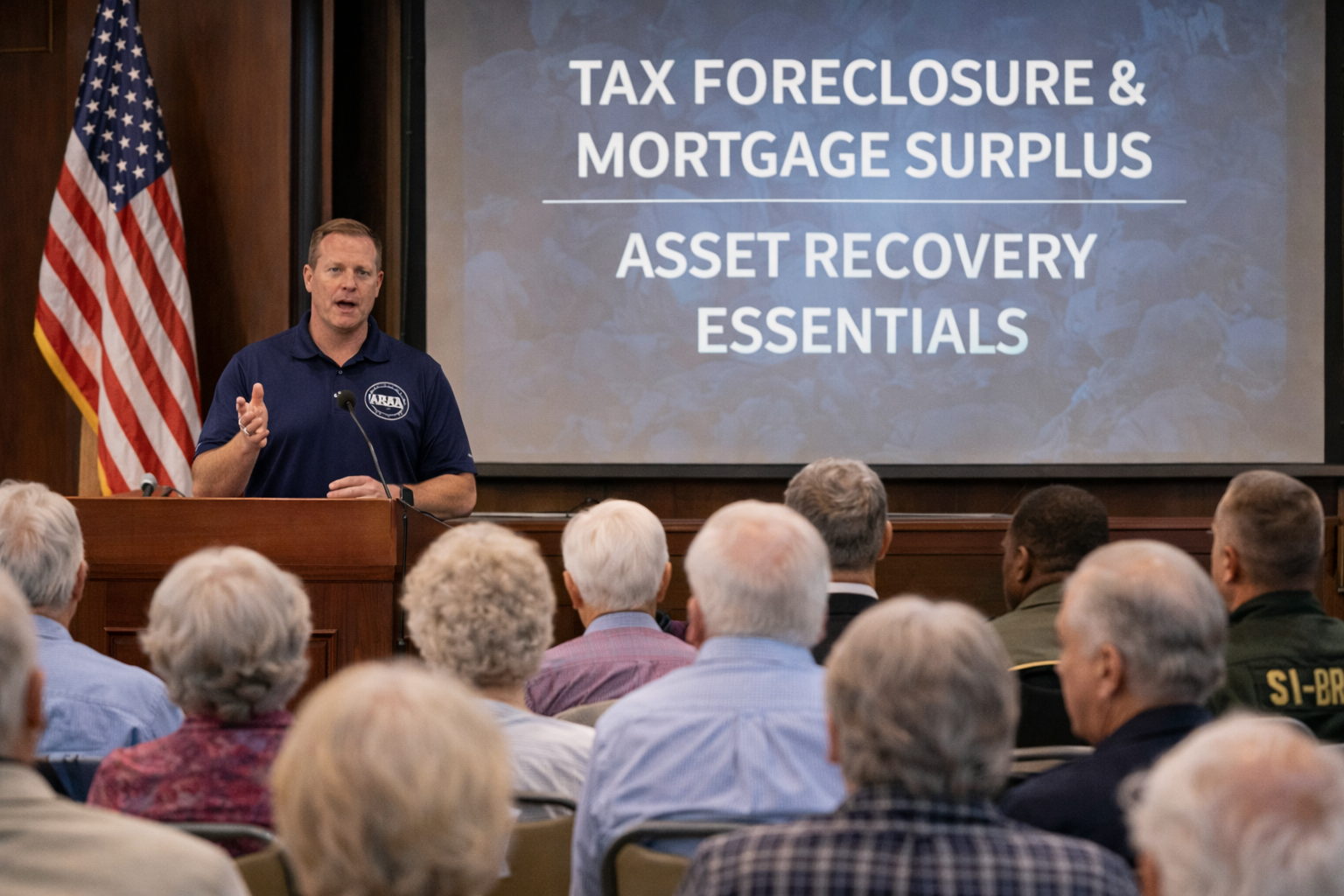
Professional standards are not optional. They are foundational
Asset Recovery operates at the intersection of private rights, public processes, and sensitive information. Without clearly defined and consistently applied standards, even well intentioned work can result in harm to claimants, increased risk to counties and institutions, and erosion of public confidence. ARAA exists to promote standards that bring clarity, consistency, and accountability to the profession.
Professionals, Not Adversaries
ARAA is not adversarial to counties, courts, or public institutions.
We are partners in purpose.
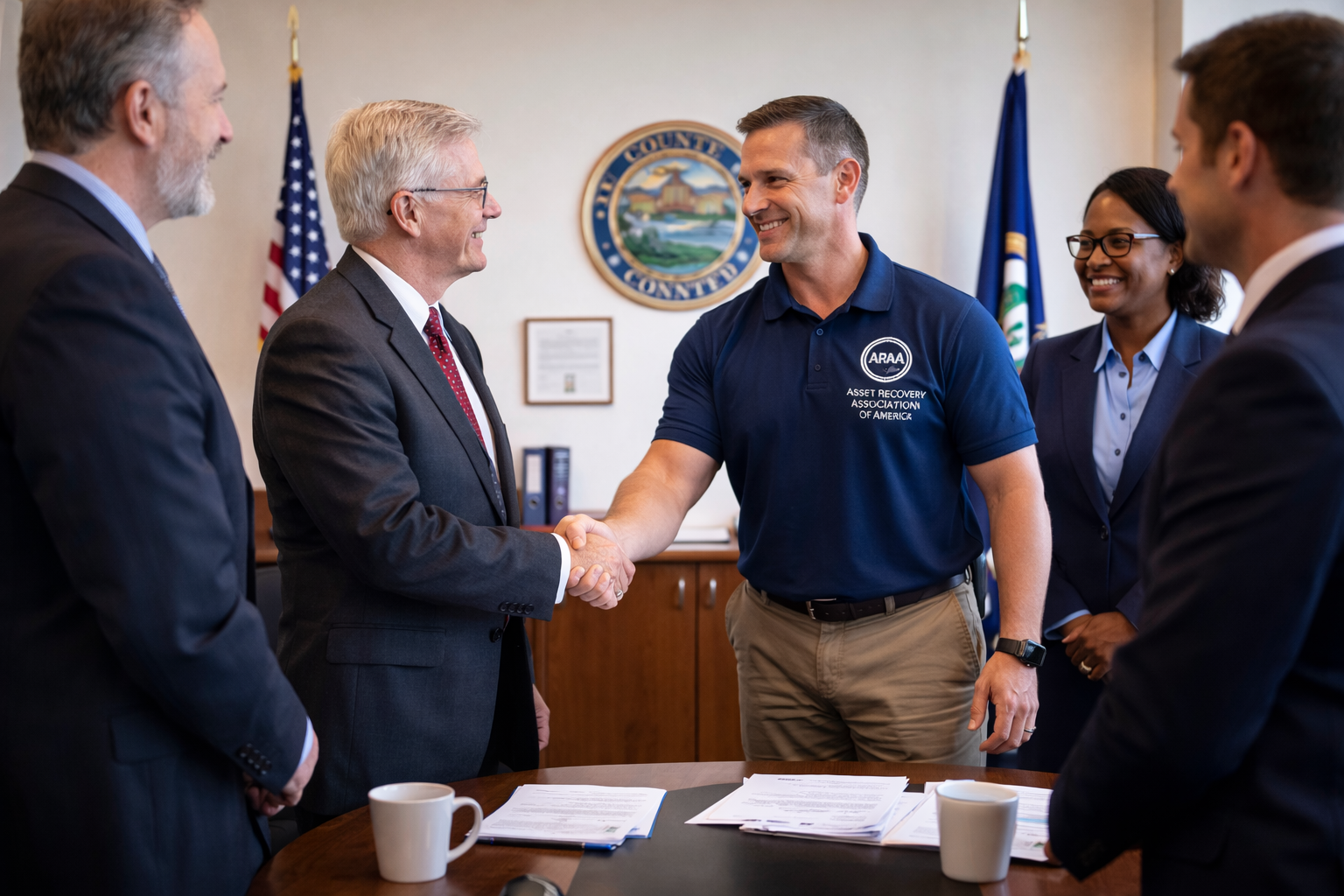
Counties and state agencies are responsible for safeguarding sensitive information, managing liability, and ensuring lawful distribution of funds. We understand those obligations because our members share them.
Our professionals work with counties and governments to return assets to their rightful owners efficiently, ethically, and in compliance with applicable laws and procedures.
We support reasonable safeguards, credential verification, and professional standards that protect claimants and institutions alike. Collaboration, not conflict, is the future of responsible Asset Recovery.
Gatekeepers of the Profession
ARAA accepts its responsibility to protect the integrity of the Asset Recovery profession. Membership reflects accountability, discipline, and a commitment to standards that go beyond basic participation in the field. Asset Recovery involves public funds, private rights, sensitive information, and institutional trust. Not everyone is prepared to carry that responsibility, and not everyone should.
ARAA exists to draw that distinction. We distinguish serious, accountable practitioners from those whose actions would cause harm, exploit complexity, or take advantage of claimants and public systems. We encourage ongoing compliance because credibility is not a one-time achievement, but a standard maintained through consistent conduct. Legitimate industries define their standards, protect them, and refuse to allow the lowest bar to become the norm. Membership in ARAA reflects respect for the work, the claimants it affects, and the responsibility that comes with stewarding assets that matter.
Policy Advocacy
Our mission is to provide educated, professional representation for the Asset Recovery industry in legislative, regulatory, and administrative discussions at the local, state, and national level. We advocate for policies that protect claimants, support ethical professionals, and promote efficient, transparent collaboration with public agencies.
ARAA works to bring the voices of qualified Asset Recovery professionals to the table, particularly where policy has historically been shaped without input from those directly engaged with claimants, courts, and public institutions. By grounding advocacy in firsthand experience, data, and ethical standards, we seek to ensure that policy decisions reflect real world impact rather than assumptions or misinformation.
Through education, collaboration, and responsible advocacy, ARAA engages with lawmakers, government officials, courts, and agencies to improve understanding of Asset Recovery, clarify our role, and support safeguards that strengthen public trust.
Our advocacy prioritizes fairness to claimants, while also recognizing the operational realities faced by Recovery Specialists and public institutions. We believe effective policy must balance accountability with practicality, protect vulnerable individuals, and reduce administrative burden without compromising oversight.
The Asset Recovery Association of America is committed to elevating the profession through informed advocacy, ethical leadership, and constructive engagement, ensuring that Asset Recovery is recognized as a legitimate, essential public service grounded in dignity, transparency, and trust.
Our Belief System
Asset Recovery is regulated, consequential work. It exists to lawfully return assets to their rightful owners through established legal and administrative processes. This work requires accuracy, verification, documentation, and respect for statutory authority.
The Asset Recovery industry spans multiple disciplines, including surplus funds, unclaimed and escheated property, and other dormant assets, each governed by distinct legal frameworks and responsibilities.
Ethical Asset Recovery is grounded in transparency and fairness. It does not exploit confusion or lack of awareness, and it treats claimants, estates, and public institutions with dignity and care.
Because this work involves significant financial interests and the assets people spend a lifetime building, it carries a heightened duty of responsibility.
For this reason, the Asset Recovery industry requires a credible, informed voice in policy development to protect claimants, support lawful recovery, and maintain public trust.
ARAA exists to provide that voice through disciplined advocacy, ethical standards, and institutional engagement.
A Commitment to Fair Contingency Practices
At the core of ethical Asset Recovery is the contingency model.
ARAA affirms that Asset Recovery Specialists must operate on a true contingency basis, meaning compensation is earned only upon successful recovery. This aligns professional incentives with claimant outcomes and ensures access to assistance without upfront financial burden.
We further believe that contingency fees must be fair, reasonable, and proportionate, preserving the claimant’s equity and honoring the purpose of Asset Recovery itself. Excessive or exploitative fees erode trust and undermine the legitimacy of the profession.
ARAA promotes fee practices that reflect service, not opportunism, and requires full disclosure so claimants may make informed decisions.
Attorneys remain governed by their own professional rules regarding contingency arrangements. Asset Recovery Specialists are expected to adhere to ethical standards appropriate to their non-attorney role.
Subject Matter Experts and Trusted Advisors
ARAA members are subject matter experts whose work is grounded in technical knowledge, procedural accuracy, and sound judgment developed through real-world experience. Asset Recovery is not uniform. It varies by jurisdiction, asset type, governing authority, and legal framework, requiring a practical understanding of how statutes, administrative rules, courts, and agency practices intersect in application.
Our members bring applied expertise across tax foreclosure surplus, mortgage overages, unclaimed and escheated property, and other abandoned assets. They navigate county, court, and agency processes with precision, uphold rigorous documentation standards, engage claimants ethically, and collaborate lawfully with attorneys when required. This depth of experience positions ARAA members not only as practitioners, but as trusted advisors whose insight strengthens recovery systems, informs policy, and builds institutional trust.

Protecting Claimants and Public Confidence
Asset Recovery often involves unfamiliar systems, strict requirements, and limited timeframes. Claimants rely on knowledgeable guidance to navigate these processes accurately and lawfully.
ARAA promotes conduct that ensures claimants receive clear explanations, defined representation, and transparent compensation structures. Claimants should always understand who is acting on their behalf, how their claim is handled, and what outcomes are realistic.
Because Asset Recovery involves sensitive information and significant financial interests, careful documentation, secure data practices, and fair contingency arrangements are essential. When claimants have confidence in the professionals assisting them, agencies can administer claims efficiently and trust in the Asset Recovery process is strengthened.
Ethical Collaboration Across Disciplines
Asset Recovery often involves coordination between Asset Recovery Specialists and licensed attorneys, each operating under separate legal and regulatory frameworks. Specialists manage claims preparation, documentation, and claimant engagement, while attorneys provide legal analysis and court representation where required. Ethical collaboration respects these distinct roles and does not involve supervision, substitution, or informal delegation outside lawful scope.
ARAA supports collaboration models that clearly define responsibilities, maintain transparency for claimants and reviewing agencies, and preserve these boundaries. When roles are understood and respected, claims move efficiently, claimants receive accurate guidance, and public institutions maintain confidence in the Asset Recovery process.

-Be a part of something great.
-Make the commitment to excellence in the Asset Recovery field.
-Stand out amongst the rest as a trusted claims representative.
-Show the world that Asset Recovery is a dedicated and legitimate field.
-Join the directory built on honesty, integrity, compassion, and professionalism.
Membership as a Commitment
ARAA membership reflects a commitment to excellence, accountability, and responsibility. It signifies an understanding that Asset Recovery is a public-facing field involving complex financial matters, public trust, institutional confidence, and professional responsibilities.
Membership affirms that a member:
Operates in compliance with applicable licensing and registration requirements (in their state)
Works exclusively on a true contingency basis
Charges fair, reasonable, and fully disclosed fees
Adheres to established ethical and professional standards
Verifies identity, authority, and entitlement at the outset of each claim
Commits to protecting claimants, institutions, and the integrity of the profession
Seeks an active role in shaping responsible policy and supports a credible voice for the Asset Recovery industry
Contact us
Interested in becoming a member? Step your game up, fill out some info and we will be in touch shortly. We can’t wait to hear from you!